londonhvacpro · London HQ · National critical cooling
Data Centre HVAC Services
Data centre HVAC services keep white space, UPS rooms and battery rooms inside their design temperature and humidity limits while the IT load runs continuously. We are a London-headquartered refrigeration and air conditioning contractor attending critical cooling plant nationally, including Leeds, Manchester and Newcastle.
Engineer labour from £120+VAT/hour · One-hour minimum · 24/7 critical cooling callout · Parts and contracts quoted separately
Work covers CRAC and CRAH units, precision air conditioning, direct expansion and chilled water systems, and the controls that stage redundant units. Every visit is planned around the site's change control, so maintenance or repair never removes more cooling capacity than the redundancy design allows.
Critical cooling equipment we maintain and repair
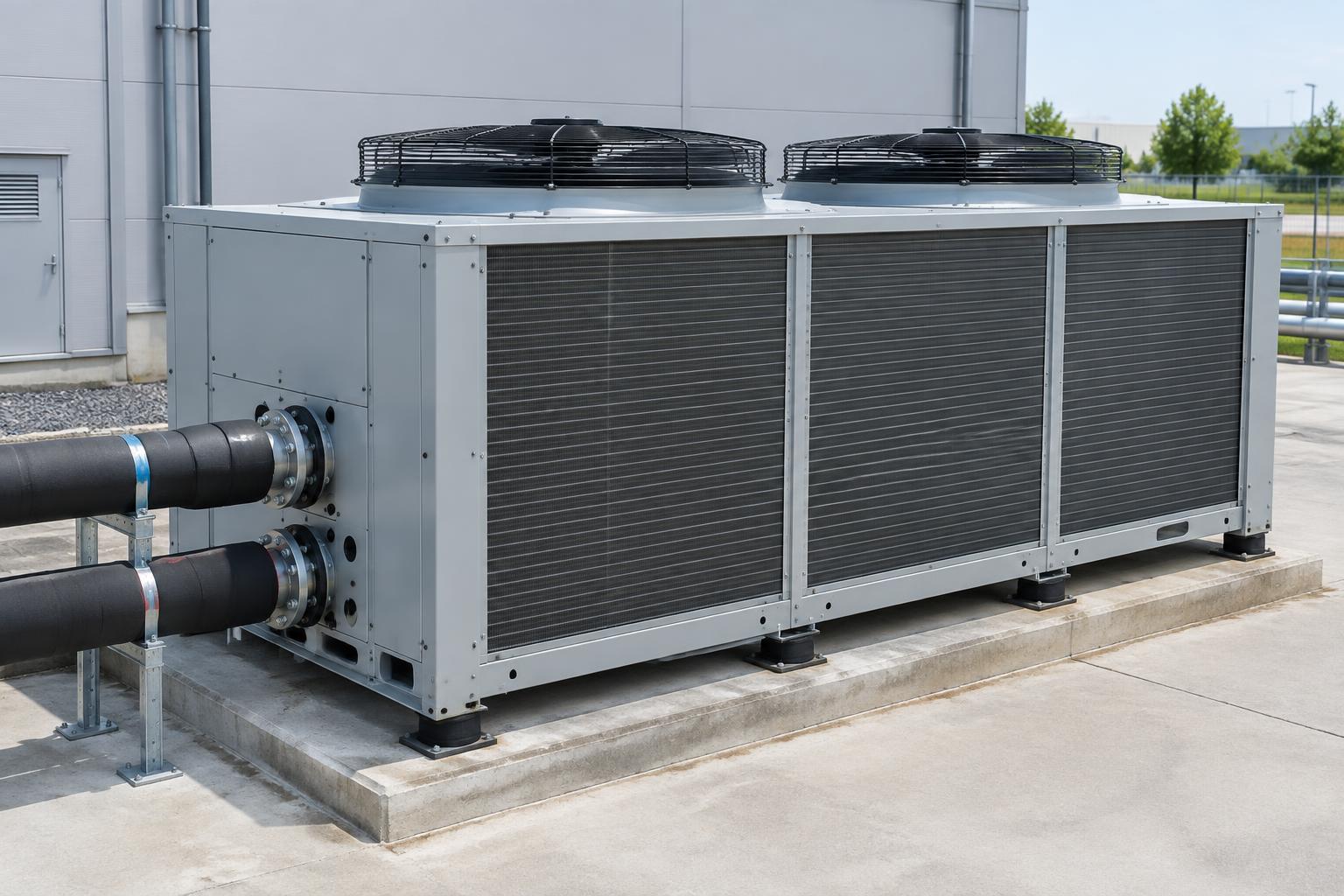
Computer room air conditioning (CRAC) units contain their own refrigeration circuit, with a compressor, evaporator coil and either a remote air-cooled condenser or a glycol dry cooler. Computer room air handlers (CRAH) carry no compressor and instead modulate a chilled water valve against supply or return air temperature. Both types depend on fans, filters, humidifiers, condensate drainage and controllers working together, and a fault in any one element can reduce delivered capacity long before a high-temperature alarm is raised.
Precision air conditioning differs from comfort cooling in its sensible heat ratio, its tolerance for continuous operation and its tighter humidity control. Smaller comms rooms and edge sites often use split DX precision units or in-row coolers placed between racks. UPS and battery rooms need their own attention: battery life falls as room temperature rises, and inverter losses add a steady heat load that does not fall overnight. Where a site also relies on chillers, we can link the work to our chiller maintenance and repair services so the whole cooling path is reviewed.
Working to N+1 and 2N redundancy
Most data halls are designed with at least one more cooling unit than the load requires (N+1), and some with two fully independent systems (2N). Redundancy only protects the room if the standby units actually start, reach capacity and are not suffering the same hidden fault as the duty units. Planned visits therefore include confirming the duty and standby rotation, checking that lead-lag and failover logic transfers load when a unit is stopped, and verifying alarms reach the building management system or monitoring platform.
Before any unit is isolated we agree with the site which unit may be taken out of service, the expected duration and the conditions that would require it to be restored immediately. If the room is already running without spare capacity because of an earlier fault, we raise that as the first priority, because routine work in that condition would leave the room at N or below. Method statements, risk assessments and permit-to-work procedures are followed where the operator requires them.
Planned maintenance tasks
A typical planned maintenance visit records supply and return air temperatures, refrigerant pressures, superheat and subcooling, compressor current and fan speeds for each unit, then compares them with previous visits to spot gradual decline. Filters are inspected or changed according to measured pressure drop rather than the calendar alone. Condenser and dry cooler coils are checked for debris, fin damage and correct fan operation, since high head pressure is a common cause of summer trips.
Humidifier cylinders and electrodes, condensate pumps and drain lines are inspected because water leaks under a raised floor are a serious risk near power distribution. Leak detection cable and sensors are tested where fitted. Refrigerant leak checks are carried out by F-Gas certified engineers at the frequency the F-Gas Regulations set for the system charge, and records are updated. Controller set points, sensor calibration and air-flow paths, including blanking plates and floor tile layout where they affect unit performance, are reviewed and findings reported.
24/7 callout and fault response
Critical cooling faults are attended around the clock. Common faults include high-pressure trips from blocked or failed condenser fans, low-pressure trips from refrigerant leaks, compressor failures, failed EC fans, humidifier faults, chilled water valve actuators sticking, and controllers losing communication so standby units do not start. The first step on arrival is to establish how much cooling capacity remains and how quickly room temperature is rising, so stabilising the room comes before full diagnosis.
Stabilising may mean resetting and monitoring a unit after a safe check, forcing standby units to run, adjusting set points within the operator's limits, or arranging temporary cooling where capacity cannot be restored quickly. Diagnosis then follows with measured readings, and repairs that need parts or a planned outage are scheduled with the site team. Engineer labour is charged from £120+VAT per hour with a one-hour minimum; parts, refrigerant and larger replacement work are quoted separately after assessment.
National coverage from a London base
Our head office and most engineers are in London, and the majority of planned work is in London and the surrounding counties. Critical cooling clients with sites elsewhere in the UK, including Leeds, Manchester and Newcastle, can be covered under the same planned maintenance arrangement so one contractor holds the asset records, refrigerant logs and fault history for the whole estate. Attendance times outside London depend on distance and are agreed in writing before a contract starts rather than promised in general terms.
For multi-site operators this means consistent reporting formats, the same leak-check records and the same approach to redundancy across every room. When a regional site needs emergency attendance, travel arrangements are confirmed at the time of the call so the site team knows when an engineer will arrive.
Leeds, Manchester and Newcastle data centre sites
In Leeds, Manchester and Newcastle, the planned maintenance scope is the same as for London rooms: CRAC and CRAH units, precision air conditioning, UPS and battery room cooling, condensers and dry coolers, controls and leak detection. Visits for these cities are scheduled in advance so planned work can be grouped and isolations agreed with each site before travel.
Before a regional contract begins we survey the equipment, record model and serial details, confirm refrigerant types and charges for F-Gas records, and agree escalation contacts and realistic emergency attendance windows. Operators then receive a written maintenance schedule and asset list covering each site.
What to have ready when you contact us
A useful first conversation covers the number and type of cooling units, the manufacturer and approximate age, the redundancy design, current alarms or recent trips, and any planned load growth. Existing service reports and refrigerant records help us understand the plant's history. For new contracts, we normally start with a site survey so the maintenance schedule matches the equipment actually installed rather than a generic task list.